Matthew Knies is exactly why Craig Berube never had a reason to open this door for Boston.
The number floating out Friday was massive.
Ryan Bosworth posted that Boston would have needed James Hagens and two of its next four first-round picks to get Knies out of Toronto.
That tells you everything about how Brad Treliving viewed this file. Knies was not being discussed like a useful winger.
He was being priced like a core piece, and that changes the whole conversation.
From Boston's side, it also explains why this never got off the ground. Don Sweeney could talk, ask, and test the market, but paying that kind of futures package for one player is the sort of move that can bend an organization for years.
The clip matters because it strips away the fantasy-trade noise.
Bosworth's post didn't frame Knies as available. It framed him as the kind of player Toronto would only move for an outrageous return.
The screenshot drives that home even more.
Three first-tier asset structures were outlined, and every one of them forced Boston to give up premium draft capital or multiple high-end prospects.
The ask also lines up with where both teams sit.
Boston had the interest, but Toronto held the leverage
You can see why the Bruins would check in anyway.
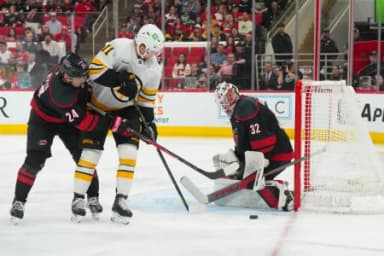
The puck protection jumps off the screen in clips like this, with Knies shrugging off contact along the wall and driving defenders backward before the play can settle.
But Toronto held every card here. Berube and Treliving were not shopping for futures unless the return felt franchise-altering, and Boston clearly hit that wall.
That's why this failed blockbuster is more revealing than disappointing.
It shows the Maple Leafs valued Knies high enough to make a division rival blink, and it shows the Bruins were right to stop before the price got reckless.
In the end, the loudest part of this story is the one number nobody in Boston could get comfortable with: the total cost of even starting the deal.
Did the Bruins make the right call by refusing Toronto's Matthew Knies price?
Voting closed